


The most important advantages of WABIO Technic and Technology:
- It is so far the world’s only industrially proven method for the efficient biotechnological (energy and materials) utilization of feedstocks with high concentrations of lignocellulose and proteins.
- In the WABIO fermentation reactors used at the start-up of the bacterial culture are continuously reproduced throughout the lifetime of the installation, and therefore it is not required to use charges containing fresh bacteria.
- The biotechnological process carried out in WABIO fermentation reactors takes place absolutely without oxygen. Therefore, you can process extremely acidified feedstocks or hydrolysates whose pH value is less than 4 (pH <4).
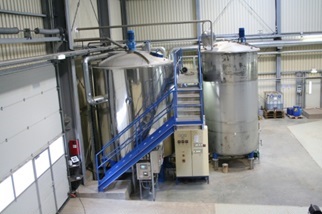
- WABIO fermentation reactors are made of ordinary structural steel, not surface protected from the inside and therefore can work without problems above 55°C (>55°C).
- The necessary heating surfaces guaranteeing the selected reactor temperature in the reactor are integrated with the outer wall of the reactor in the zone of the largest static loads, thanks to which they also serve to save material consumption as static elements of strengthening the reactor structure by absorbing peripheral stresses.
- WABIO fermentation reactors do not need any mechanical mixing systems and therefore their size is not limited. Reactors with a tank volume in the range of 450 to 8000 m3 have been working for 22 years without interruption and without emergency.
- WABIO fermentation reactors are equipped with systems for the simultaneous removal of floating and falling sludge, thanks to which they can work continuously with feeds with a high content of light and heavy impurities.
- Due to their compact construction (diameter = height), WABIO fermentation reactors have the smallest possible surface of the jacket and therefore have the smallest specific requirements as to insulation and outer sheathing.
- WABIO fermentation reactors and thus also installations for biotechnological processing of biogenic feeds, using these reactors, have the smallest possible specific building surface.
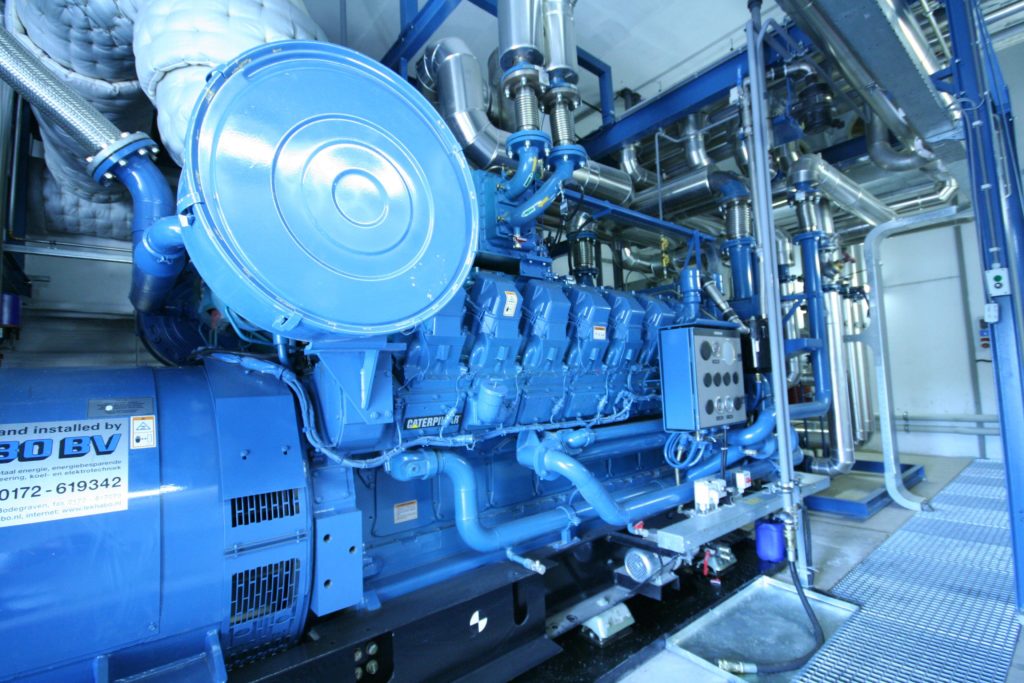
- By incorporating aerobic hydrolysis prior to the fermentation process, effective breakdown of the lignocellulosic components of the processed biosuspension is obtained as well as the intense formation of short chain fatty acids before the start of the anaerobic fermentation process in the reactor.
- By feeding the biogas pipeline directly from the WABIO fermentation reactor, where the resulting biogas is under its own pressure above 40 mbar (without any compression systems), it is possible to overcome flow resistance through pipelines, a biogas desulphurization station and pressure resistances of gas storage in the easiest way.
- The location of the biogas desulphurization station in front of the gas storage enables the use of affordable double-gas gas storage facilities, because the stored gas is free of gas storage membranes diffusing through the coating, made of plastic, mercaptans, i.e. intensively aromatic sulfur compounds.
- The sulfuric organic acid formed in the desulphurization installation, before its integration, is used as a carrier of sulfur compounds for the production of organic NPKS fertilizers as well as for highly effective precipitation of inhibitors (NH4, H2S) in the installation for cleaning the charge of harmful substances and inhibiting the fermentation process and for acidification biosuspension at the hydrolysis station.
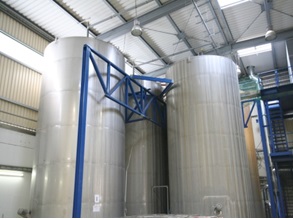
- If it is necessary to use an installation for the treatment of biofiltrate excess to the quality of discharge water (river, sewerage, etc.), flotation sludges generated as well as excess sludges from UASB fermentation and sludges from the attached nitrification and denitrification process are 100% used as biogenic input to the process of obtaining biomethane..